Contact Us
丨
EN

Do You Still Remember Why Use SGA ?
Supraglottic airway (SGA) is a daily used airway device for all anesthesiologiests. Since the invention of SGA 40 years ago, SGA has replaced part of intubation from the 30 mintues surgery, step to step, to 2 hours surgery. Comparing to intubation, SGA has many clinical benefits to patients:
✅ Less incidence of airway and tooth trauma
✅ Improved hemodynamic stability at induction and during emergence
✅ Minimal increase in intraocular pressure following insertion
✅ Reduced anesthetic requirements for airway tolerance
✅ Lower frequency of coughing during emergence
✅ Improved oxygen saturation during emergenc
✅ Lower incidence of post surgery sore throats in adults
✅ Increased speed and ease of placement by inexperienced personnel
✅ Increased speed of placement by anesthesiologists
✅ Decreased drug cost and overall costs depending on the length of the case
✅ Improved operating theater efficiency (reduced induction and room turnover time)
What Stops Anesthesiologists to Use SGA for More patients ?
20-30% general anesthesia surgeries are using SGA for airway management now. But if SGA has so many advantages, why Anesthesiologists do not use SGA for more patients.
Alough many studies from 1990s show that SGA is as safe as intubation. But in the real word, anesthesiologists frequently meet air leaking, or even sometimes aspiration, which brings unpredictable risks.
A review of studies published on British Journal of Anesthesia showed that malposition occurs in 50-80% Blind SGA Placement Technique! That explained that the reason behinds air leaking is not the SGA itself, but Blind Technique.
That is why video laryngeal mask is regarded as the next generation SGA and the future of airway management !
What SafeLM® Can Do ?
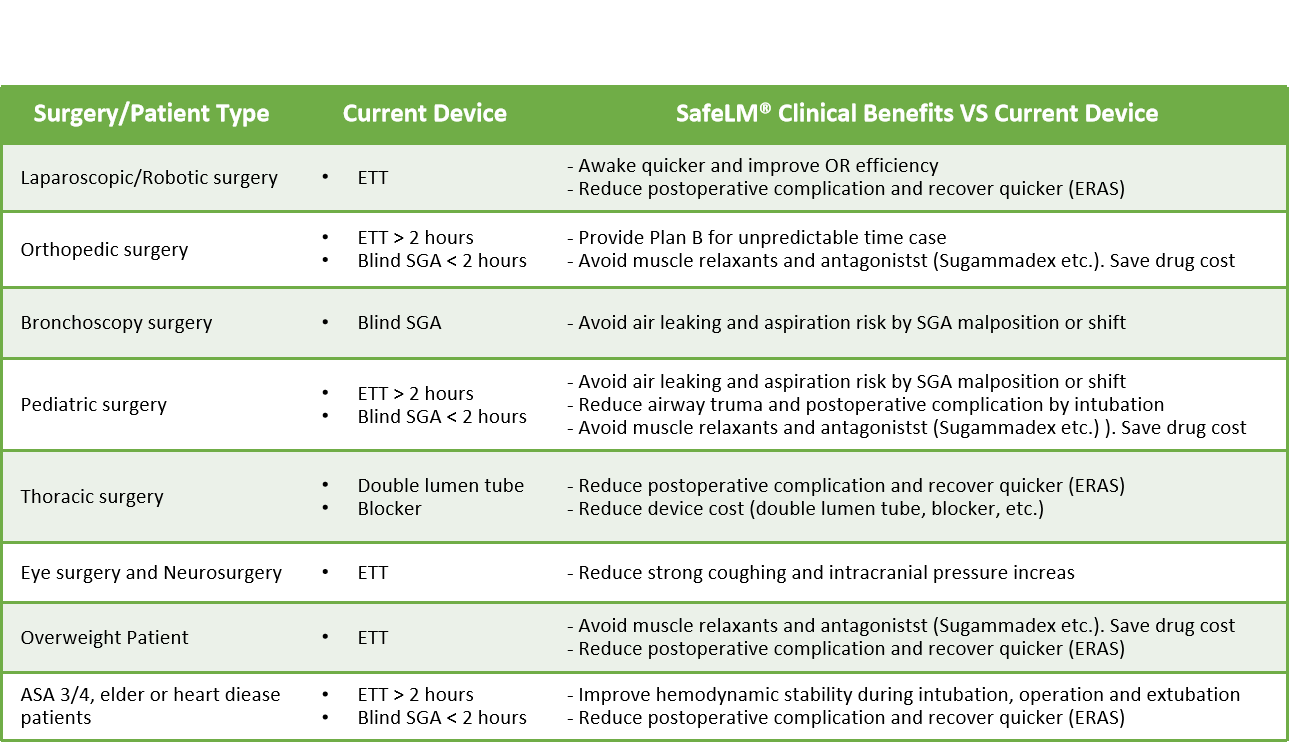
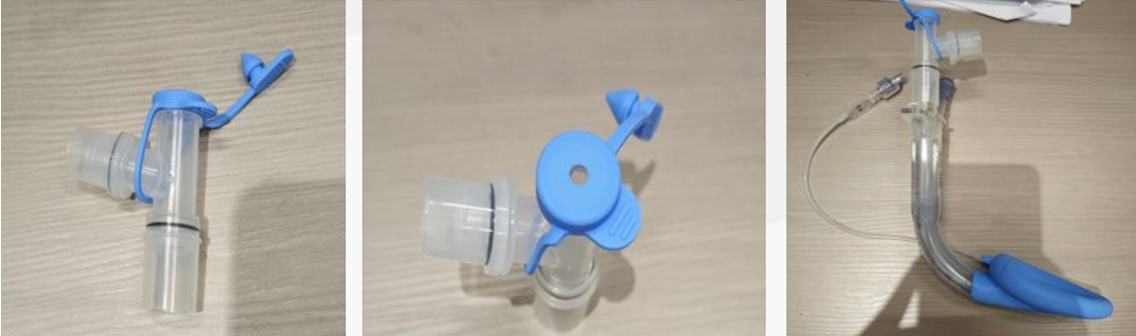
SafeLM® is a video SGA with "view-adjustable" camera. With continuous real-time visualization of airway and high sealing pressure up to 40cmH2O, SafeLM® can be used for more Advanced SGA Surgeires below, besides regular asic SGA Indication:
1. Laparoscopic surgery and robotic surgery
2. Tubeless thoracic surgery
3. Procedure >2 hours or unpredictable time, such as orthopedic surgery
4. Laterial, trendelenburg or pone position surgery
5. Overwight patient
6. Video-guided intubation for difficlut airway
7. Difficult extubation, such as eye surgery and neurosurgery
8. Bronchosopic intervention airway management support
9. Surgeries require hemodynamic stablity, such as ASA3/4, elder or heart diease patient
10. Emergency airway management
SafeLM® Advantages:
1. High Oropharyngeal Leak Pressure (OLP) for Laparoscopic Surgery or High BMI Patients
The device utilizes a medical-grade silicone cuff designed to mould to the hypopharynx, providing a seal pressure (OLP) up to 35-40 cmH₂O.
Laparoscopic Utility: This high seal allows the device to withstand the higher peak airway pressures required during pneumoperitoneum and Trendelenburg positioning, making it a safe alternative to intubation for gynecological or general laparoscopic cases.
Gastric Safety: Includes a dedicated gastric drainage channel to vent stomach contents and reduce aspiration risk.
2. Stability in Lateral Position, Tubeless Thoracic/NIVATS
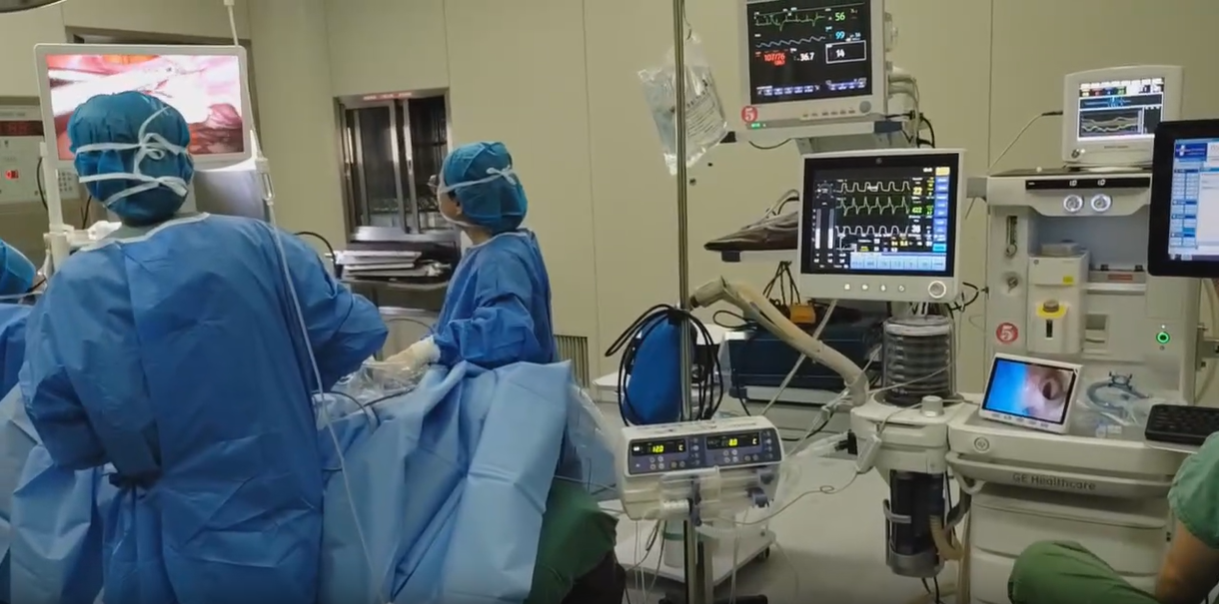
SafeLM has been utilized in lateral position surgeries and also Non-Intubated VATS (Tubeless Thoracic Surgery) where the patient is in the lateral decubitus position and breathing spontaneously.
Why it helps: In lateral positioning, blind LMAs can migrate or twist. SafeLM’s continuous video monitor allows the anaesthesiologist to continuously monitor the glottis throughout the surgery.  SafeLM Shoulder RCT.pdf
NIVATS Specific: If the patient starts to desaturate or show signs of airway obstruction, you can immediately see on the screen if it is due to secretions, laryngospasm, or mask rotation, allowing for rapid correction without disrupting the surgical drapes. 可视喉罩联合支气管封堵器在胸腔镜肺叶部分切除术中的应用.pdf
3. Bronchoscopy & Intubation Conduit
The airway tube is wide and anatomically curved to facilitate the passage of instruments.
Bronchoscopy: Acts as a seamless conduit for flexible bronchoscopy.
Rescue Intubation: If intubation becomes necessary (e.g., conversion from LMA to ETT), the SafeLM serves as a video-guided conduit. You can pass an endotracheal tube or bougie directly through the mask under your own vision on the SafeLM screen, essentially functioning like an intubating LMA (ILMA) but with visual confirmation.
SafeLM® Improves Hospital Efficiency and Save Total Cost
1. Improved Operating Room Efficiency
SGA may reduce operating room time by approximately 20 minutes per case, improving operating room efficiency and increasing the average number of daily surgeries. This can save about $900-$1,200 per case in operating room costs.
2. Faster Recovery and Shorter Hospital Stay (ERAS)
SGA may accelerate postoperative recovery (ERAS) and shortens hospital stay by about 3 days, saving approximately $2,000–$5,000 per day in hospitalization costs.
3. Reduce Muscle Relaxants and Antagonists Useage and Save Drug Cost
SGA may reduce the useage of muscle relaxants and Antagonistst (Sugammadex etc.) , avoids side effects related to these drugs and save the drug cost $40-$300 depends on manufacture.
SafeLM® Improve Safety and Contribute to ERAS